-
Author
Zoe Black, Carin Wilson and Justine Olsen -
Date
8 Jul 2026
Essay
Carin Wilson, Wellington City Library, and the enduring form of the chair – 90s to now
Writing on works by Carin Wilson to accompanying the exhibition He maramara tupu aranga
Chairs brought together in He maramara tupu aranga – both objects and as documentation – show Wilson’s constant exploration of this furniture form, through shape, geometry, materials and construction methods. Throughout his practice, he has returned to the chair as a vehicle to develop his design language.
The Kura Kowhatu chair was one of the original features of Wellington Central Library when it opened in 1991. Wilson has said that designing the chairs and collaborating with architect Ian Athfield on the project was one of the highlights of his career.
In an interview with 1News, Wilson described the Kura Kowhatu as ‘part of a bigger conversation about New Zealand identity, about expressions of place, and expressing our own individual design aesthetic.’ He explained that he was trying to generate ‘something that was Indigenous’ to counter the proliferation of mass-produced, imported furniture bought through catalogues.
Recently, a number of the chairs were refurbished and reinstated in the newly reopened library, now called Te Matapihi.
Laminated-plywood and steel-framed chairs were designed by Wilson alongside the Kura Kowhatu armchairs, also for Wellington Central Library. The form of Wilson’s Library Chair has been refined over multiple years, exploring different materials, colours and variations to the profile. The latest iteration completed this year uses steel to form the back rest and is offered to visitors to sit in during the exhibition. Wilson describes the approach he took to the original design commission:
While I had made several chair designs in small batches, they were all based around a wooden frame, and I knew there were limits to this approach. I’d also learned a bit about the immediacy of steel by hanging out with other designer/makers like Gary Hunt. The proposition that a welder could achieve in 30 seconds what a timber joint might take half a day to execute was tantalising. Also, weight and strength for volume, the steel offered many advantages.
I knew enough about lamination to be confident of the form of the seat and back, so the design for the chair basically progressed from those two components. The tested dependability of the triangulation principle completed the equation: two triangles connected by the seat frame.
The first model was more (tri)angular and looked and performed well, but the straight back ‘leg’ extended a little beyond the visual perimeter of the chair, creating a bit of a trip hazard. With my engineer friend Roman Novak, we marked out a new footprint and took an angle grinder to shorten the two sections, coaxed them together with a bend, and the welder did the rest. The resulting form was more pleasing and that became the template for production.’
—
Originated in 1982, Wilson writes on his Tapatoru/Dining Chair:
I landed on a bundle of timber at an auction with unusually minimal dimensions: 40 by 30 millimetres. I set myself the challenge of designing a chair frame while accepting those slender proportions and knew there would have to be some triangulation in the approach to counter the risk of it falling apart when I sat in it.
Tapatoru evolved from those constraints. I read some stats on ergonomics and set out. There are some unusual numbers in the angles, but every one of the eight chairs I made in the first batch is as strong as the day it was made.
—
Wilson made two of He Nehenehe, with both its prototype and finished form shown in He maramara tupu aranga. This is the first instance in which the chairs have been together since being completed in 1993. The prototype was finished with painterly colour to emphasise its flourishing profile. Justine Olsen writes on He Nehenehe:
In He Nehenehe, Carin Wilson evokes the lush indigenous forests of Aotearoa, their high arches offer protection, enclosure and connection to the natural world. Yet the wood we see here is ‘clear pine’ from pinus radiata, used to promote new industry.
Carin was affected by the replacement of indigenous forests for exotic pinus radiata and the title He Nehenehe is a reminder of their loss. Looking back in 2026, Carin reflected that the destruction of indigenous forest “just seemed like wanton vandalism without care or impunity, quite astonishing that there was no constructive plan to harvest nor fear of any consequences”.
From prototype to the final work, Carin came to terms with the commission through his love of trees and feeling that he “might be able to rescue the timber [pine] from its adverse image”, noting that “…as the project progressed I found scope to include some other elements (ebony and stainless wire and of course the leather in the upholstery). The stainless wire is functional in that it binds the ends of the vertical staves together.” By bringing a pattern of tukutuku to the binding, this chair acknowledges connections to the Māori world or te ao Māori.
He Nehenehe conveys Carin’s abiding interest in the tension of opposites – solid and void, shadow and light, natural and industrial materials and the role of art and industry. Yet it is place and identity that has guided this profound work.
—
Texts written to accompany He maramara tupu aranga: Carin Wilson and 50 years of Aotearoa design, 27 Jun–30 Aug 2026 at Objectspace in Tāmaki Makaurau Auckland and 26 Sep–1 Nov 2026 at Objectspace at Sir Miles Warren Gallery in Ōtautahi Christchurch.
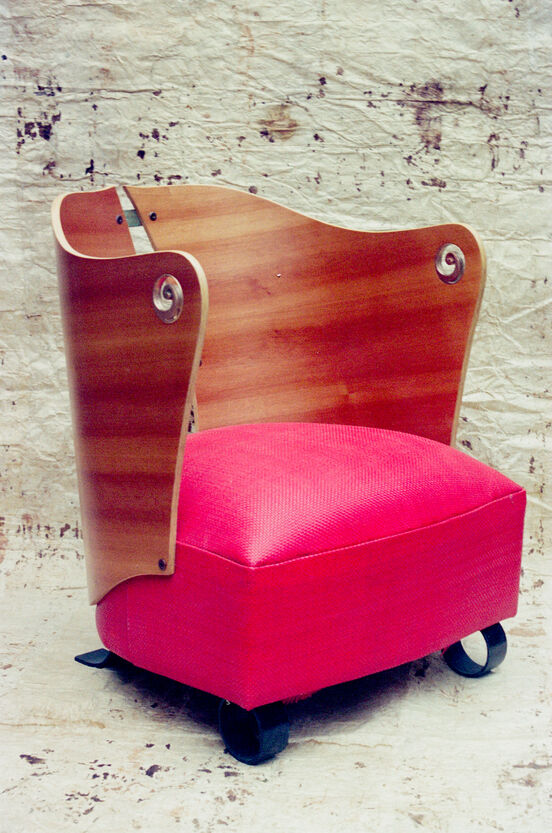
Carin Wilson, Kura Kowhatu, 1991 and 1998, mangeao wood, steel, vinyl, alcantara fabric
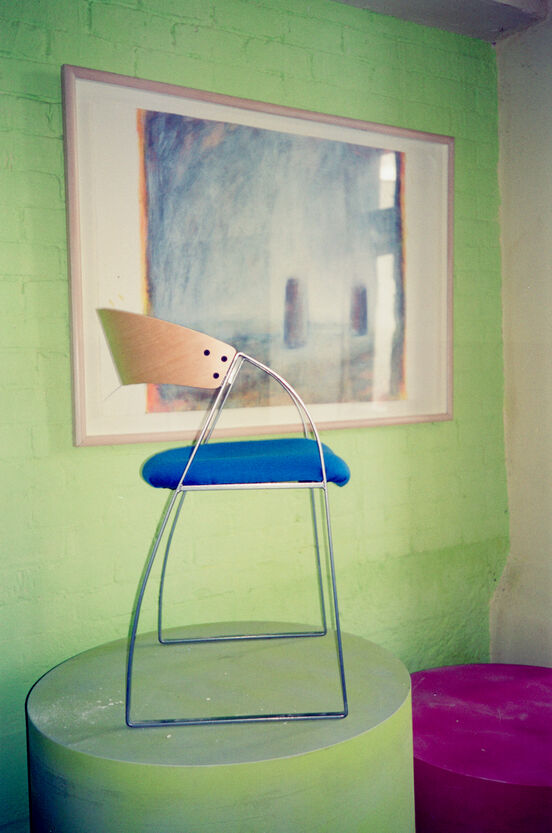
Carin Wilson, Library Chair / Plywood Chair, 1991, plywood, anodised steel
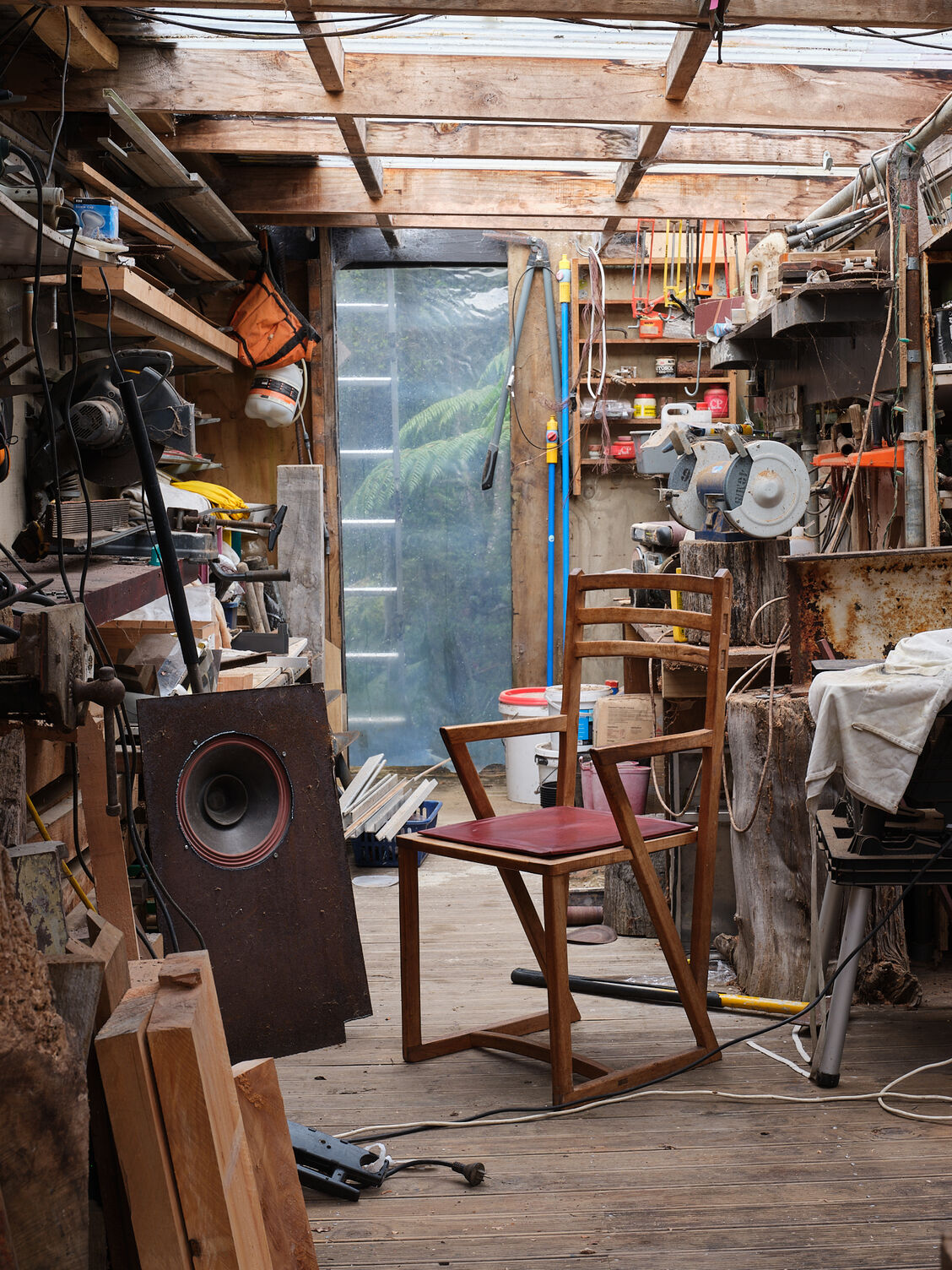
Carin Wilson, Tapatoru / Dining Chair, 1982, tasmanian blackwood, rattan cane, leather, photograph by Sam Hartnett
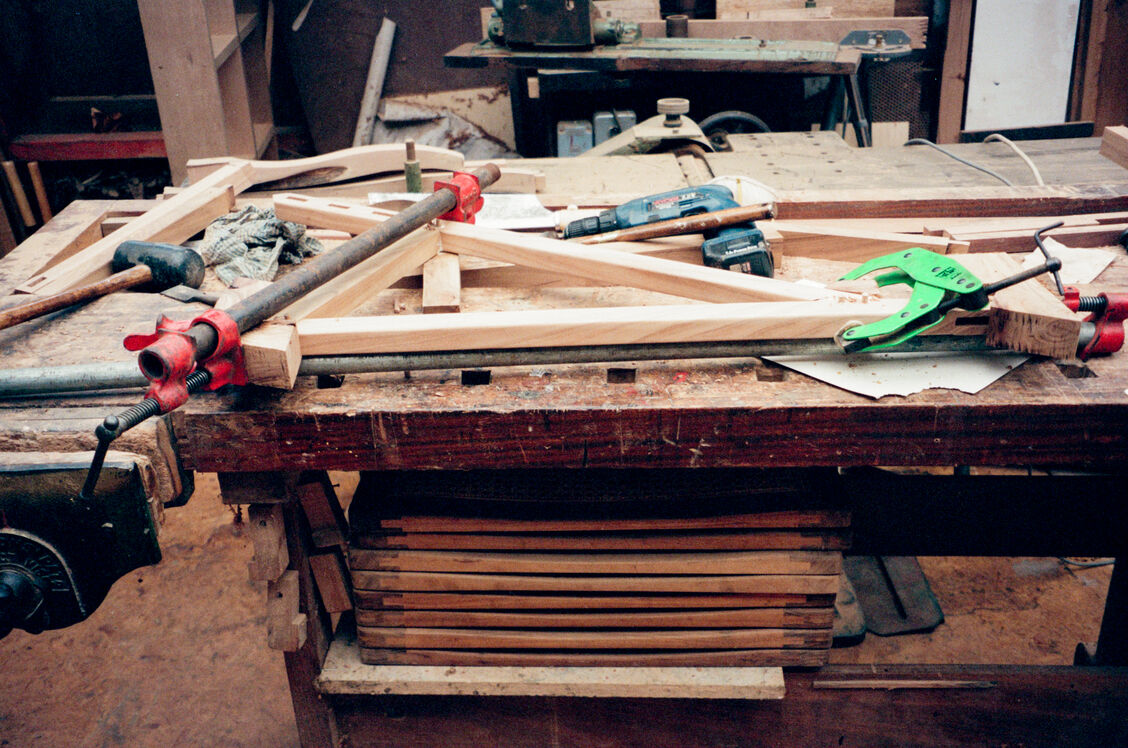
Carin Wilson, Tapatoru Dining Chair in construction, 1982
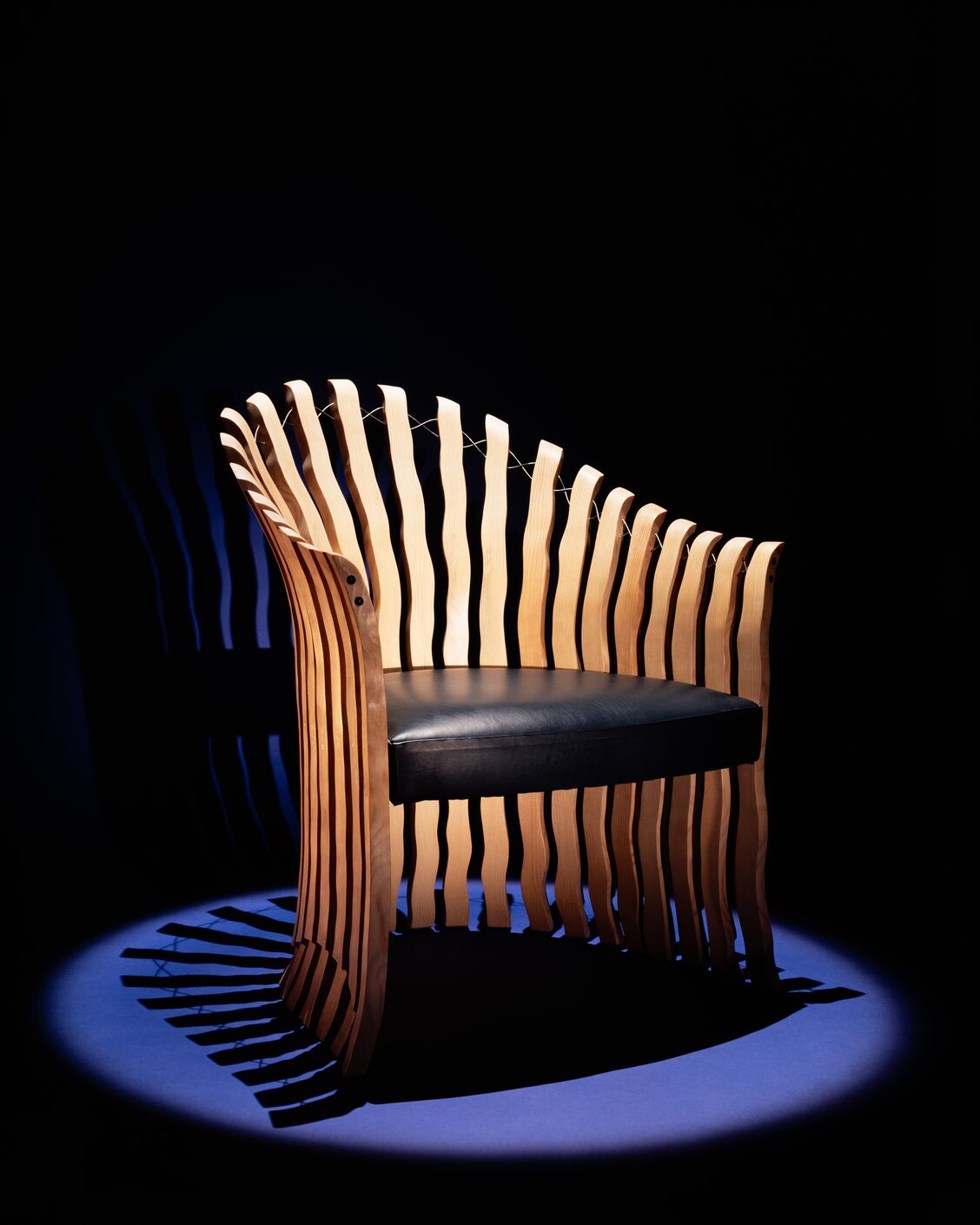
Carin Wilson, He Nehenehe, 1993, pinus radiata, ebony, leather, stainless steel tracer