-
Author
Zoe Black, Carin Wilson, Jade Kake and Rau Hoskins -
Date
8 Jul 2026
Essay
Carin Wilson, Te Hononga at Unitec and education kaupapa – 2000s–ongoing
Writing on works by Carin Wilson to accompanying the exhibition He maramara tupu aranga
Rau Hoskins and Carin Wilson co-headed Te Hononga – The Centre for Maori Architecture and Appropriate Technologies at Unitec (2001 – 2020). The school is pioneering not just in its focus on Māori knowledge systems but that all projects have a real client and always involve some level of hands on building. Rau Hoskins writes:
Carin’s love of tūpuna materials helped shape our kaupapa at Te Hononga. One of the first was the Whare Raumati at Parangarahu (Matapouri), a project where we created a summer encampment out of repurposed timber and materials on hand. It was a building dedicated to coastal summer living, rather than something to survive all seasons.
The whare raupo was next being built on my whenua at Whangaruru. We were guided by kaumātua including Haare Willams and Taranaki Nuri who provided tuition regarding the construction methods we were using. This approach allowed students to be fully engaged with local community aspirations and develop an intimate understanding of the materials and processes as our tūpuna did. Carin approached our projects with deep sensitivity and real enthusiasm that transferred to all participants. He had a real affinity with the materials and would almost commune with them.
These projects gave students the opportunity to work with their hands alongside whānau and hapū – a different way of learning that is still only practiced at Te Hononga, Unitec, in Aotearoa. Being immersed in the building process deepened students understanding of kaupapa Māori architecture and its relevance to the development of an architecture that is truly of Aotearoa in ways that couldn’t be achieved simply through academic study.
—
A 2006 wakahuia (container) epitomises Wilson’s exploration of function and beauty. Here, he reconsiders the elaborate nature of traditional form, intentionally stripped back of its usual densely carved surfaces. The simplicity and essence of the delicate hanging vessel is amplified, intended to hold one of the most graceful of forms – the feather. Four years earlier, Wilson created the remarkable table Ngā Taonga o Tanemahuta / Whārangi. He writes:
The life cycle of pepetuna is one of the most intriguing of all our forest dwellers. The larvae find their way from the forest floor to the kātua where they burrow, creating a home for up to 7 years. They emerge as our most beautiful pūrerehua to mate and lay new eggs over two days, then die.
Pūriri is a common host to pepetuna, maire is another. The tunnels they leave in the rākau are the spectacular evidence of their life cycle. Yet typical conventions around timber are that these tunnels are flaws and the timber is wastefully discarded.
Here, I chose to celebrate the reminder of the pepetuna in a composition with other rākau – kauri, matai. This symphony o nga rākau is presented on the cast bronze kātua, which includes representations of the earliest known drawings of a rākau, graphically inscribed on a cave wall in Te Waipounamu as a testimony to our aroha for our forests.
—
Carin Wilson’s architectural interventions are marked by a careful and close reading of the past, and the craftsmanship that has been the cornerstone of his career as a maker, designer and craftsperson.
Te Kooti Whenua Māori in Whangārei acknowledges the history of mamae inherent to the institution of the court and consciously seeks to reshape the courtroom into a wharenui. The predominant use of rākau is warm and inviting; custom joinery forms a korowai manaaki for all who enter the space, and embedded motifs celebrate whakapapa and connect to the cultural landscape of Whangārei-Terenga-Parāoa. Wilson’s designs for custom upholstery fabric reference Māori making practices, re-presenting raranga techniques documented with care by Mick Pendergrast (a former Assistant Ethnologist at the Auckland War Memorial Museum and a renowned expert in Māori fibre arts) and preserved through the archival record.
Te Kōngahu Museum of Waitangi references the natural history of the whenua, capturing the flora endemic to the site before the land was cleared and setting it in concrete through innovative casting techniques using fibreglass moulds.
In Te Whare Wānanga o Awanuiārangi, Wilson’s trademark craftsmanship and care create a contemporary but distinctly Māori interior environment through careful detailing and by using timber and warm colours to counter-balance the predominance of steel and glass. Wilson is a craftsperson that embraces a type of hybridity, drawing on Māori and Pākehā history and cultural expression, and utilising traditional making techniques alongside new technologies.
– Jade Kake
—
Uenuku is a monumental carving, a taonga of the Tainui people. The style of the carving is unlike most traditional Māori forms, and it has become a recurring inspiration for Wilson. He says:
I am entranced by Uenuku. I can’t say anything more than that it is an extraordinary carving, its wairua reaches right across Aotearoa. I’ve found nothing in our current civilisation that eclipses the majesty of its realisation.
The form of Uenuku Dreaming reflects the carved headrests found across Te Moana nui a Kiwa. In moments when I will allow myself to dream of what might be, I dream of being one with Uenuku, the aspirational, unattainable, inspirational wonder of our magnificent culture.
—
Texts written to accompany He maramara tupu aranga: Carin Wilson and 50 years of Aotearoa design, 27 Jun–30 Aug 2026 at Objectspace in Tāmaki Makaurau Auckland and 26 Sep–1 Nov 2026 at Objectspace at Sir Miles Warren Gallery in Ōtautahi Christchurch.
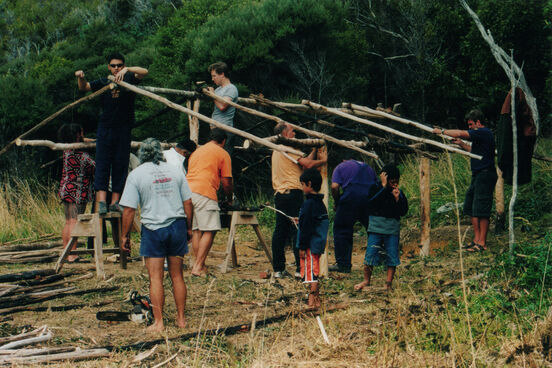
Te Hononga construction kaupapa, early 2000s
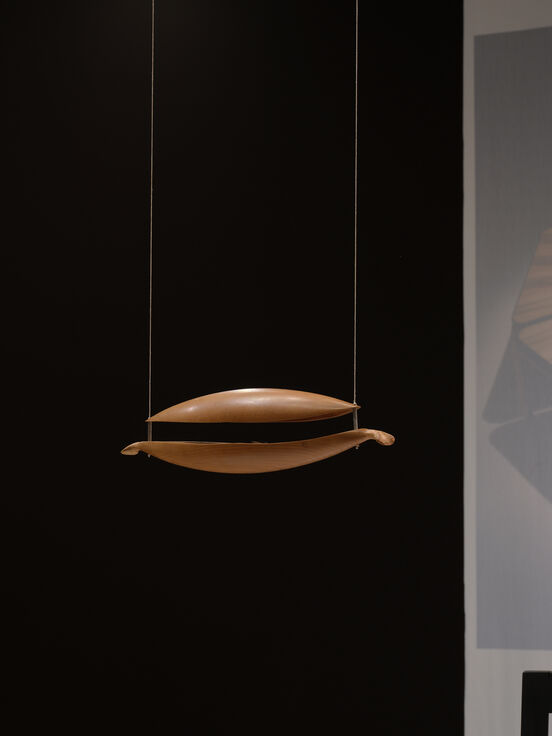
Carin Wilson, Wakahuia, 2006, kauri, photograph by Sam Hartnett
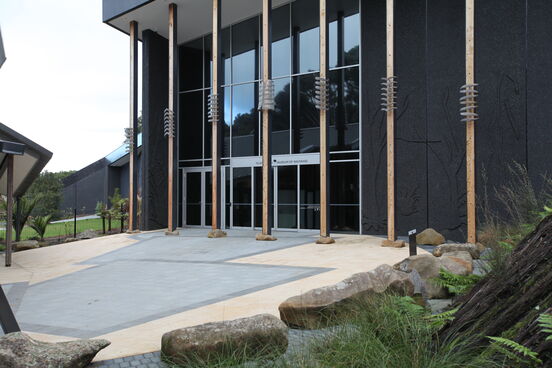
Te Kōngahu Museum of Waitangi
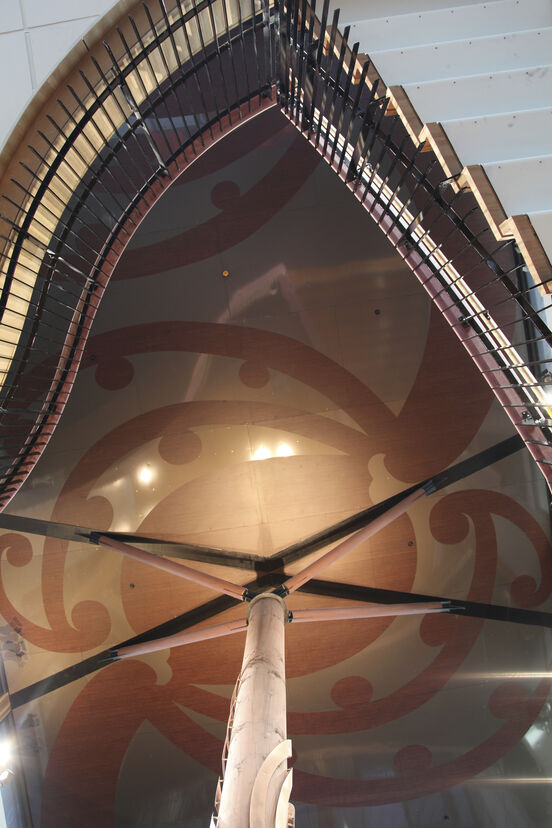
Te Whare Wānanga o Awanuiārangi
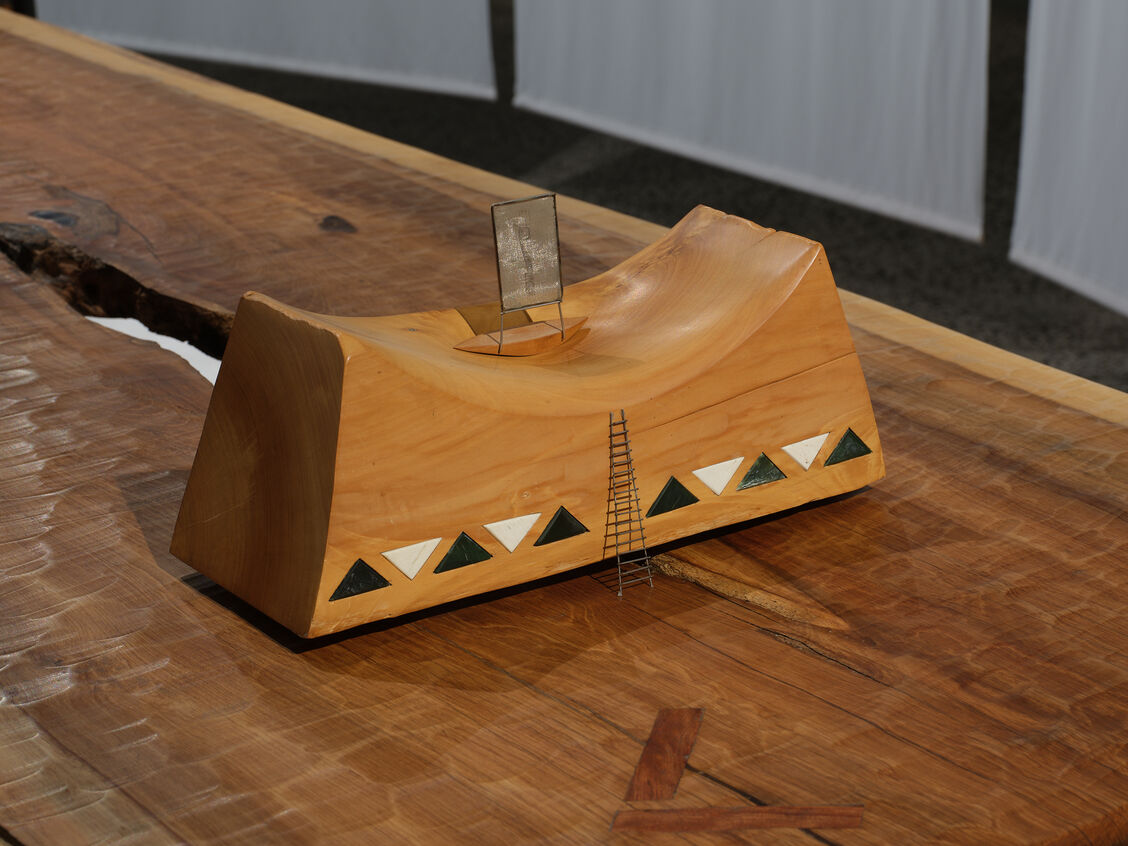
Carin Wilson, Uenuku Dreaming, 2004, tōtara, pounamu, hīhī tohorā, stainless steel, photograph by Sam Hartnett