-
Author
Zoe Black and Carin Wilson -
Date
8 Jul 2026
Essay
Carin Wilson, early works, the CSA and a critical commission – 70s to early 80s
Writing on works by Carin Wilson to accompanying the exhibition He maramara tupu aranga
In the early 1970s Wilson established a studio in Ōtautahi and took part in numerous exhibitions, particularly at Canterbury Society of Arts Gallery (CSA). CSA became a hub for furniture exhibitions in Christchurch through the 1980s and 1990s and helped bring a public understanding of alternative and handcrafted furniture pieces, made locally and with native timbers.
The establishment of the Canterbury Guild of Woodworkers in 1980 gave formality to the group of makers and instigated regular public and private displays of members’ work.
Wilson’s 1981 cabinet, Go For Credit In The Straight World, was a pivotal moment in the beginning formation of Wilson’s individual style and was displayed at CSA in 1982. Recently, drawings for Go for Credit were discovered by Wilson on the back of the poster for the first Canterbury Guild of Woodworkers exhibition in the early 1980s.
The title is borrowed from a Young Marble Giants album from the late 1970s called Colossal Youth. The sentiment in the lyrics was everything I needed to explore an idea that had already begun forming, that nothing needs to be constrained by what its function suggests. I had only briefly been attracted to the proposition of making cabinets that conformed to the cubic parameters of functionality first.
The matai came from millers I knew on the West Coast. Its golden hues and clear, strong grain were speaking to me constantly as I coaxed this crazy idea together.
– Carin Wilson
—
In 1983, Carin Wilson organised James Krenov, a Swedish master cabinet maker to travel to New Zealand on a Fulbright exchange. While here he travelled around Aotearoa, sharing skills and techniques to eager students.
While Krenov was in New Zealand, the Auckland Guild of Woodworkers displayed their first annual exhibition, including pieces from around 30 makers.
Wilson included a wooden box as part of the exhibition. In review of the show in the Listener (1983), Charles Bagnall described the piece as ‘a jaunty box. A juxtaposition of light and dark wood, sharp edges and soft flares. The box is built around the twisted piece of wood in the front and there are surprises in store for those who open up the lid, well-executed inlay work being found in the bottom.’
—
Wilson’s 1981 coffee table Mountain and Plain was produced from found timbers and Wilson commented that those ‘limitations forced a combination of the best proportions I could wrangle. The compact scale presented an opportunity to explore creative challenges.’
Greg Murrell has owned the piece for around 30 years. He noted ‘it has always been a useful piece; at one point hosting a turntable, at another time an occasional table in a bedroom through to the present day where it proudly sits as a coffee table in my lounge.’
Murrell appreciates the interplay between the geometry, craftsmanship and genealogy in the piece: ‘the daring of the angles, the differing joins, the whakapapa within the kahikatea – it’s a testament to Carin’s craftsmanship that it is just as solid today as it was when created.’
—
Ngā Manunu o Te Puia was a critical commission for Wilson, won via a competition to design the boardroom table and chairs for the QE II Arts Council in 1985. He describes the design here:
The first and most important aspect to the design was that there should be no head to the table. The second proposition, that we are a country formed by a series of explosions, allowed me to develop a compelling metaphor I found irresistible: of the parts being greater than the whole, and independently self-sufficient. This idea would enable multiple possible configurations, an idea that appealed immensely.
A timber veteran named Ernie Jelinek knew how to slice up the amazing piece of figured tawa that would illustrate the exploding energy. Mike Dimoline hand-stitched the leather upholstery. James Hoogeveen and Harriet Lukens were with me in the studio, all learning as we progressed through the uncharted territory of steam bending, laminating, forming with unplanned solutions like shaping the corners of the tabletop by zapping the timber in a microwave, making it just supple enough to bend quickly to the irregular contour.
Of course, at the time all I had was the inspiration, ideas and confidence to embark on the project, inventing as we went along, but little expertise in measuring the time it would take to bring the entire work together. There would have been a ceiling to the budget and I said I would make it for that sum.
—
Perhaps the ultimate 1980s invention, Carin Wilson created Lair for a Lounge Lizard after being inspired by Milanese architect Maurizio Morgantini’s Telematic Ulysses: the office towards the third millenium. Morgantini’s installation reimagined the office space as a series of integrated stations, positioned around central supports.
Wilson envisaged Lair for a Lounge Lizard as a similar all-in-one solution – a place to relax with a novel, conduct some business calls and later, enjoy a martini. The high backed curved enclosure hugged a repurposed car seat and included wooden shelving and side tables. The base featured the poutama form, present in many of Wilson’s pieces.
—
Texts written to accompany He maramara tupu aranga: Carin Wilson and 50 years of Aotearoa design, 27 Jun–30 Aug 2026 at Objectspace in Tāmaki Makaurau Auckland and 26 Sep–1 Nov 2026 at Objectspace at Sir Miles Warren Gallery in Ōtautahi Christchurch.
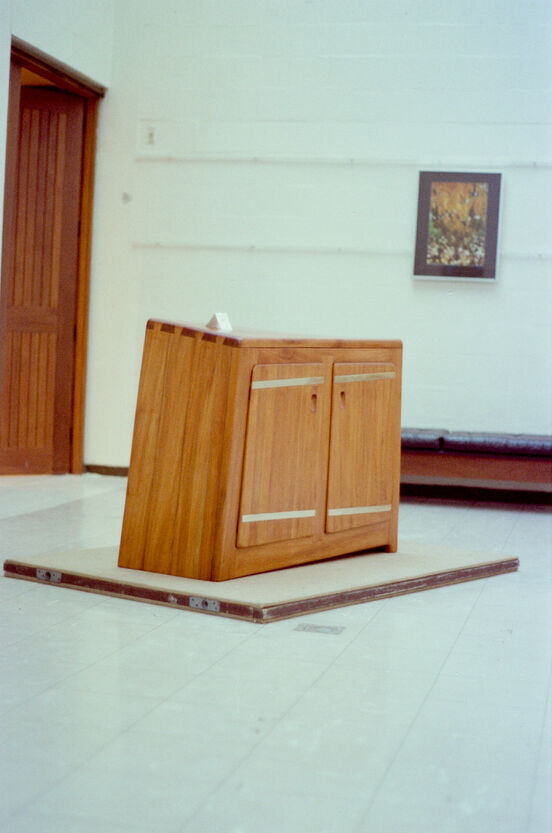
Carin Wilson, Go For Credit In The Straight World, 1981, matai, brass
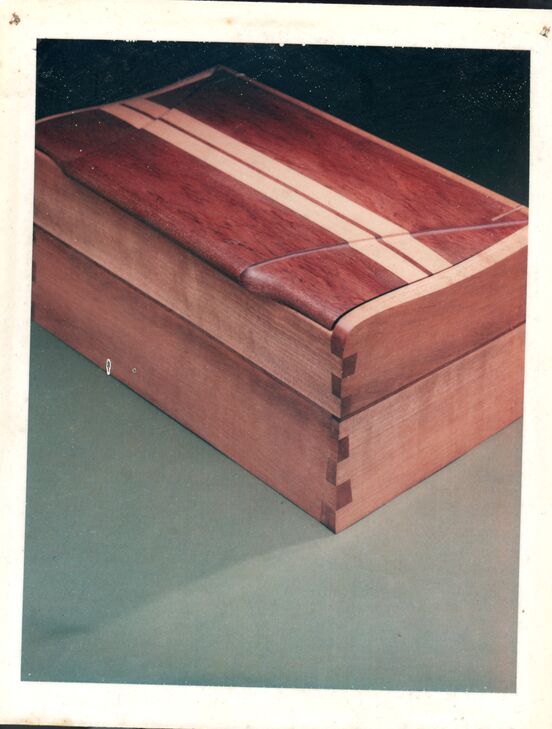
Carin Wilson, Wooden box, 1984, tawa, jarrah, sepetir, padouk, elm, collection of the Dowse Art Museum, purchased 1984
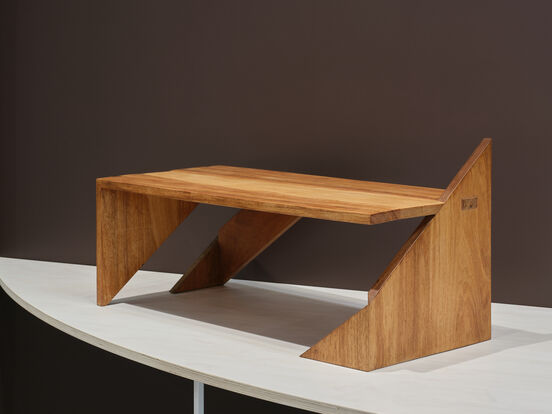
Carin Wilson, Mountain and Plain, 1981, blackwood, kahikatea, courtesy of Greg Murrell, photograph by Sam Hartnett
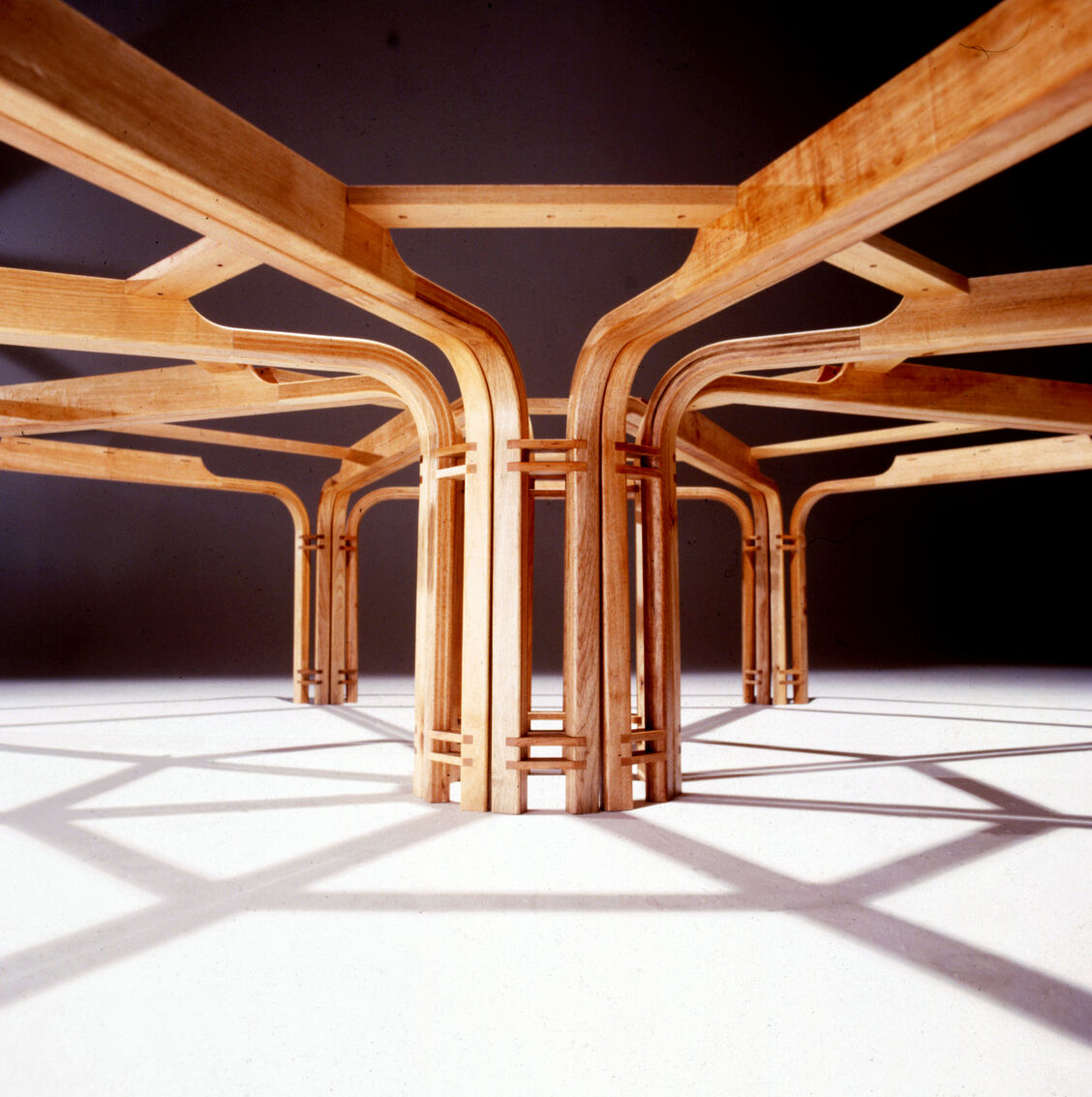
Carin Wilson, Ngā Manunu o Te Puia, 1985, laminated tawa, bookmatched tawa veneer, leather, currently located at Te Whare Wānanga o Awanuiārangi
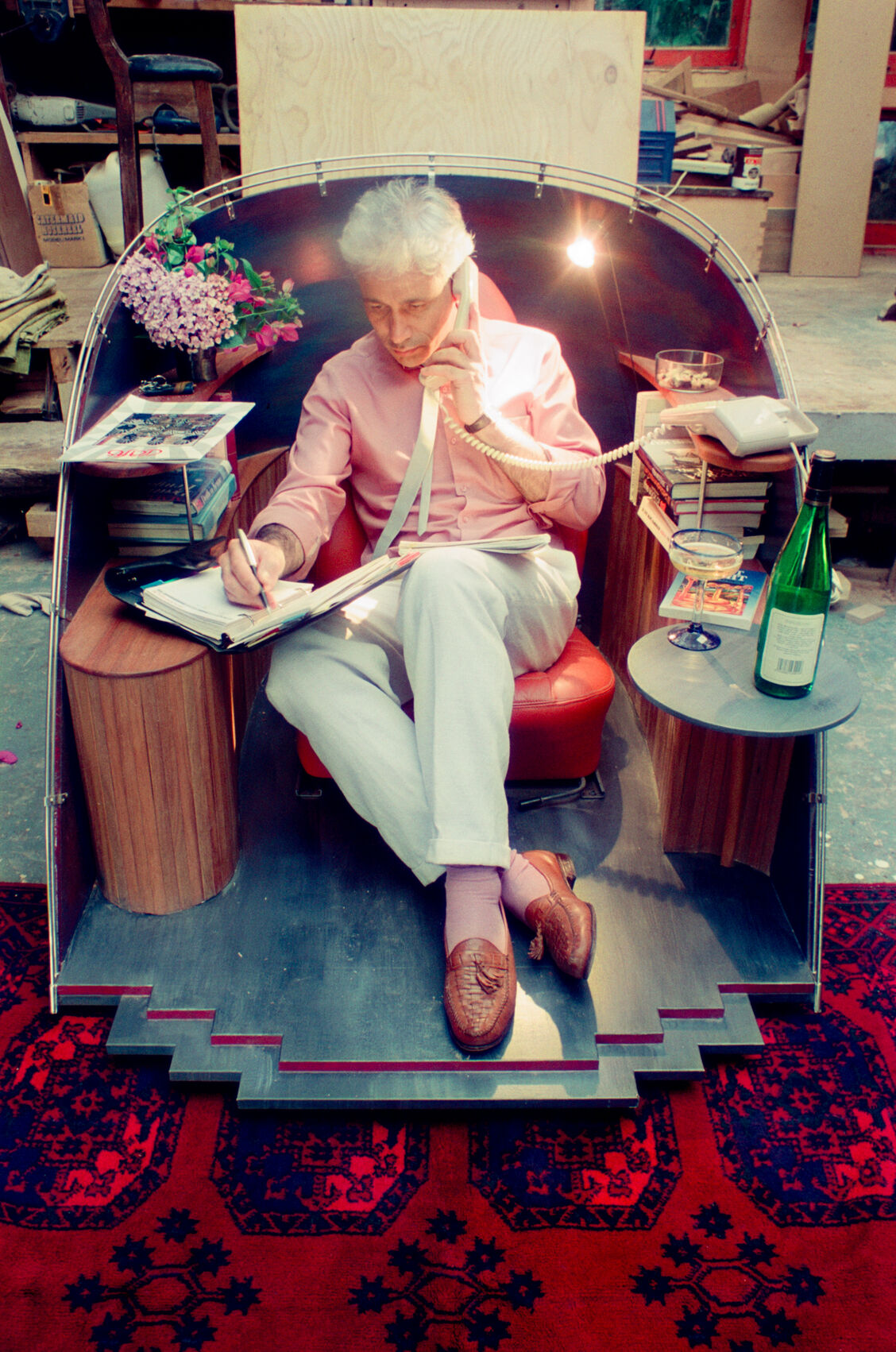
Carin Wilson, Lair for a Lounge Lizard, 1988, mixed media