-
Author
Tommy de Silva -
Date
11 Nov 2026
Essay
The past, present and future; accessing Waiuku, Auckland’s Waikato fringe
Long before trade and traffic were funnelled along Great South Road and State Highway One, waterways were the original highways – without which, Auckland’s colonial settlers would have starved. Kai grown in the rich Waikato soils south of the city was transported by waka up the namesake awa and across Te Pae o Kaiwaka, a portage route, to the settlement of Waiuku. From there it travelled the length of Waiuku awa, before crossing the Manukau moana to markets at Onehunga, and onto Auckland settler’s tables.
I picture the calm morning waters across what we Ngaati Te Ata Waiohua call Te Whare o Te Atua, or Te Manukanuka o Hoturoa – known to many now as the Manukau Harbour. When Tamanuiteraa strikes the moana, it illuminates a hundred-strong detachment of kaihoe paddling Te Toki a Tapiri, one of the grandest waka taua in all Aotearoa. The tauihu piercing through the glassy waters is adorned with wonderful whakairo that compliments the chiselled mataora of the kaihoe.
Back then in the mid-1800s, Waiuku was well connected in this way to the central city through the transport means of the day, waterway-highways. Waiuku flourished as a middle-man market town between the fledgling Auckland colony and the prosperous paa and abundant maara kai of the mighty Waikato. The southern fringe of Auckland’s rohe was connected to the bustling central isthmus through a constant flow of boats running this trade route between Waiuku and Onehunga. This transport link brought some of the centre’s wealth to its fringe, exemplified in Waiuku by the grand Kentish Hotel and the nearby wharf that was the historical starting point for ferrying cargo and passengers across the harbour.
Yet everything changed from 1863 with the illegal invasion of the Waikato, a stone’s throw south of Waiuku. Not many Aucklanders realise that the Great South Road was built by the colonial military to mobilize troop movements, bringing death and destruction down upon Te Kiingitanga¹ in its quest to embody the tino rangatiratanga promised through Te Tiriti o Waitangi. The Crown’s destruction during the Waikato War marked the point when the colonial economy violently superimposed itself over iwi Maaori as the national economic engine. Part of that shift was the metaphorical drying up of the waterway-highways in favour of roads² – causing my tuurangawaewae of Waiuku to lose access, mobility and trade.
There’s another powerful metaphor for what happened to Waiuku alongside the construction of the Great South Road; the theft of Te Toki a Tapiri. Despite Ngaati Te Ata not being considered the Crown’s enemy during wartime³, local militiamen still stole the great waka taua – and the once mauri-filled means of transport eventually became a curio on display at Auckland Museum. The Crown illegally destroyed dozens of our other waka during the war⁴, eroding the economic and transport independence of my people.
However, this southern fringe of the Taamaki takiwaa still had transport links to the centre via passenger ferries to Onehunga. Yet six-decades later, those dried up too, being replaced by train services. Despite railways having troubled colonial legacies of raupatu, when my nana grew up at Taahuna Paa near Waiuku she could at least rely on public transport to visit our tuupuna maunga in central Auckland. During my lifetime, however, there have been no trains for me to take to Waiuku. Instead, my only realistic option to visit my marae at the city’s fringe – hopping behind the wheel of a gas guzzler – goes wholeheartedly against kaitiakitanga.
I want to raise my future tamariki in a Taamaki with a reliable, robust public transport network all across Auckland, from Waiuku in the south to Wellsford in the north – like the expansive railway network of my nana’s youth, or the busy ferry services of her nana’s youth. With passenger rail recently returning to nearby Drury and Paeraata, why not extend services 25km west of the latter to Waiuku – a town currently much larger than the former two combined? The track still exists, as does the public passion for trains since the opening of the City Rail Link, however, the political will does not. Nonetheless, I’ll die on a puke advocating for my future tamariki, as Auckland ahikaa, to be able to visit their marae via transport that doesn’t compromise the kaitiakitanga we Maaori hold dear.
—
Tommy de Silva – an uri of Ngaati Te Ata Waiohua passionate about art, history, politics, transport and urbanism – is a freelance writer and researcher from Taamaki. He cut his teeth on indigenous research projects under esteemed tohunga at Waipapa Taumata Rau The University of Auckland, before becoming a Maaori political reporter for The Spinoff. Since leaving full-time journalism, his mahi has been published by Auckland Libraries, Greater Auckland, Lonely Planet and The Spinoff. More recently, he embarked on a Maaori mentorship programme with the NZ Society of Authors to learn the ropes of crafting fiction.
—
Te reo Maaori kupu in this text are in the dialect of Waikato-Tainui, which includes double vowels. A glossary is below:
kai – food
waka – canoe
awa – river
moana – sea
Tamanuiteraa – The sun
kaihoe – paddlers
waka taua – war canoe
whakairo – carving
mataora – male facial moko (tattoo)
paa – fortified village
maara kai – food gardens
rohe – region
tino rangatiratanga – self-determination, sovereignty, autonomy
iwi Maaori – Maaori tribes
tuurangawaewae – place where one has rights of residence and belonging through kinship and whakapapa
Taamaki takiwaa – Auckland district
raupatu – confiscation
tuupuna maunga – ancestral mountain
kaitiakitanga – intergenerational socio-environmental guardianship
tamariki – children
ahikaa – continuous occupation, title to land through occupation by a group
marae – community complexes used by Maaori for cultural, political and spiritual purposes
uri – descendant
tohunga – experts
—
¹ Ringer, Bruce. 2004. "3 November 1862". Kura.Aucklandlibraries.Govt.Nz. https://kura.aucklandlibraries.govt.nz/digital/collection/manukau/id/1064/rec/73
² Ringer, Bruce. 2004. "9 April 1863". Kura.Aucklandlibraries.Govt.Nz. https://kura.aucklandlibraries.govt.nz/digital/collection/manukau/id/5677/rec/96
³ Reference: Ringer, Bruce. 2004. "9 July 1863". Kura.Aucklandlibraries.Govt.Nz. https://kura.aucklandlibraries.govt.nz/digital/collection/manukau/id/5123/
⁴ Reference: Ringer, Bruce. 2004. "24 October 1863". Kura.Aucklandlibraries.Govt.Nz. https://kura.aucklandlibraries.govt.nz/digital/collection/manukau/id/5085/rec/253
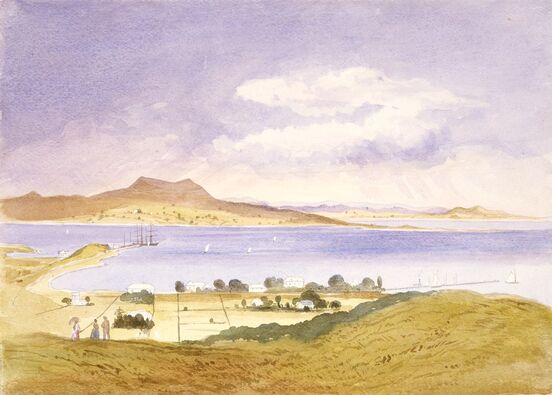
Looking down to Manukau Harbour. William Fox, Onehunga. Manakau N.Z. The western part of Auckland N.Z., c. 1860–66, Alexander Turnbull Library WC-011.
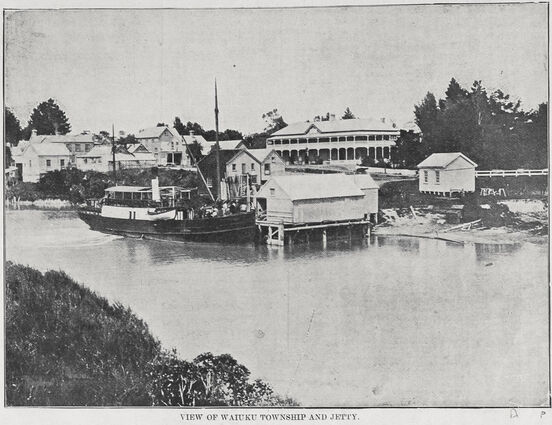
View of Waiuku township and jetty, 1898, photo by Enos Silvanus Pegler for the Auckland Weekly News, Auckland Libraries Heritage Collections AWNS-18981230-01-01.
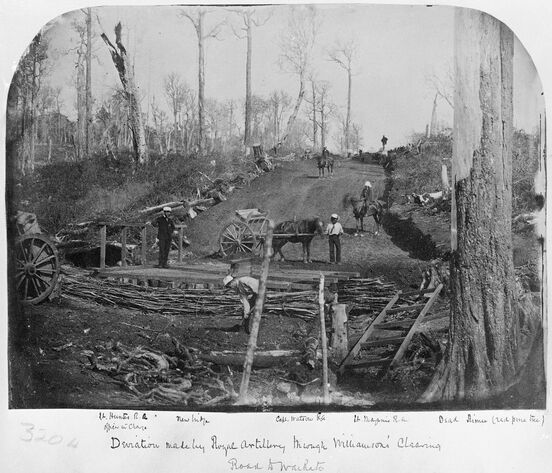
Deviation on the road to Waikato, made by the Royal Artillery, through Williamson's Clearing, c. 1863, Alexander Turnbull Library, photo by William Temple, Urquhart album, Alexander Turnbull Library PA1-q-250-48.
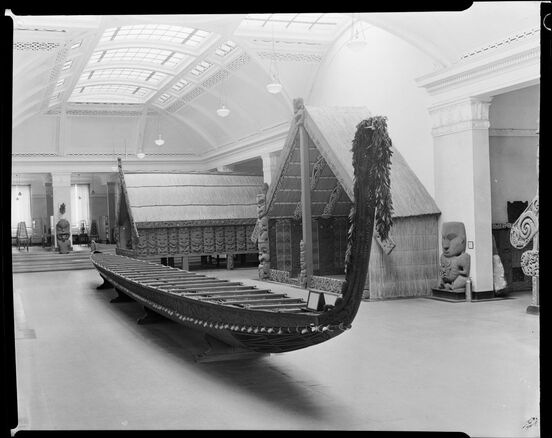
Te Toki a Tapiri. Māori waka and pātaka at the War Memorial Museum, Auckland, 1949, photo by Whites Aviation, Whites Aviation Collection, Alexander Turnbull Library WA-19354-F.
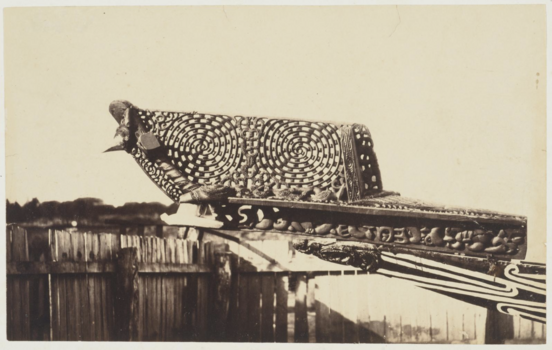
Tauihu, Waka taua Te Toki a Tapiri, c. 1865, photo by John Kinder, Auckland Art Gallery Toi o Tāmaki, purchased 1983 1983/22/15.
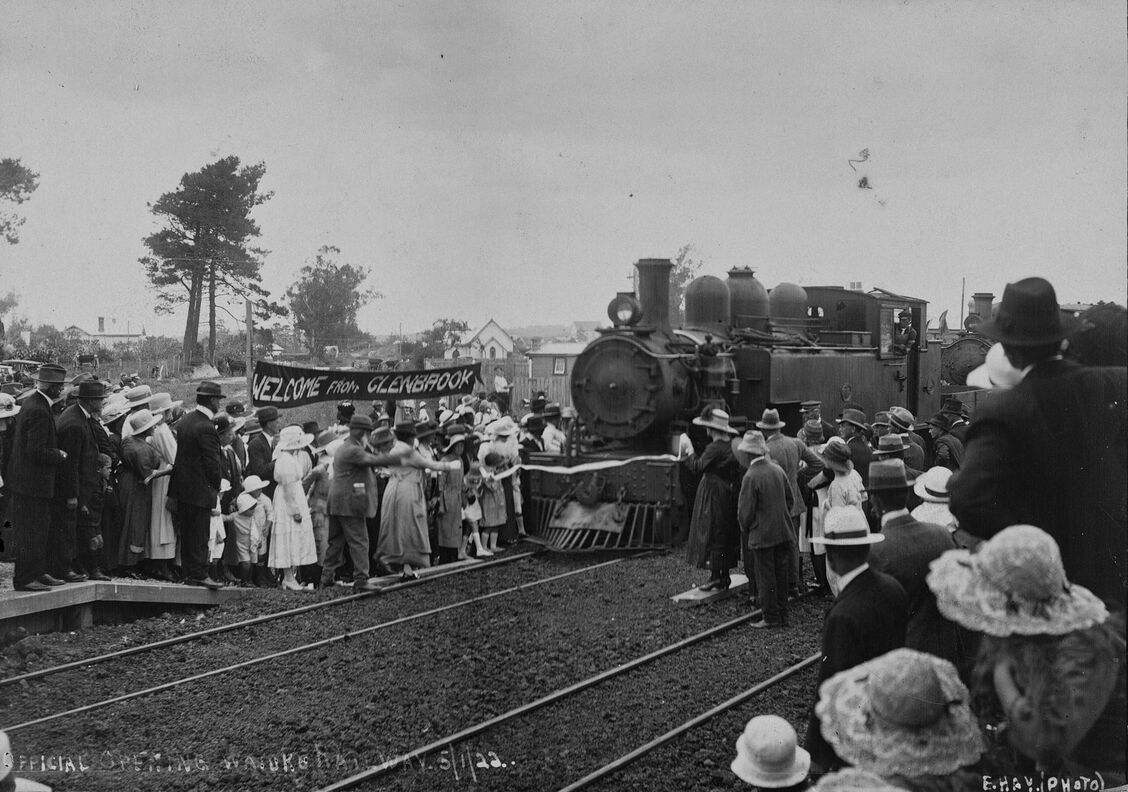
The arrival of the first train at Waiuku, 1922, photo by Eric Hay (published in the Auckland Weekly News, 12 January 1922), reproduced by courtesy of Waiuku Museum Society, 2921, Auckland Libraries Heritage Collections Footprints 04682.