-
Author
Kerry Ann Lee -
Date
29 May 2026
Essay
A Chop That Breathes
What has a round face, silver crown and follows you around the town?
In August 2021 I was invited by Wai-te-ata Press to work with a special collection of letterpress type and ornaments that once belonged to artist Guy Ngan (顏國鍇) and had been gifted to the press by Guy’s daughter, Liz Ngan. The type had originally come from the Evening Post, where it became surplus to requirements after the newspaper moved to new printing technology in the 1970s, and was later acquired by Ngan from the Blundell family. He saw artistic possibilities in the type collection and added to it with his own hand-carved hardwood chops and lead-cast blocks. Working with the ornaments, chops and blocks in turn, I developed a series of print-based experiments which explored their potential in visual storytelling and illustration.
Guy Ngan’s art follows me all around town. His distinctive forms breathe life into Wellington, the city we are both from. The linear silhouettes of Untitled (1966) charge the façade of the Government Printing Office (now Archives New Zealand), while his mighty Taiaha (1972) reminds us of the strength and challenges associated with the Reserve Bank of New Zealand. Geometric Progression (1974), poised near the Michael Fowler Centre, once inspired poet Chris Tse to be ‘a monument in another life’. The artist’s geometric and organic mastery can be found in Stokes Valley, in Worms Mating (1976), while his splendid wall-hanging in collaboration with textile artist Joan Calvert (assisted by weavers Dorothea Turner and Jean Ngan), Forest in the Sun (1976), continues to delight visitors and workers inside the Beehive. And now he is here, in the print studio.
My first sessions at Wai-te-ata Press were calendared as ‘Playtime!’. A Jacques Tati-esque world of possibilities opened up: fun with fat faces, furniture, many small moving parts, a lock and a key. Liz had also gifted another tohu: a framed illustration by her father hangs on the wall at the press. The Establishment (circa 1970s) is a graphic score featuring anthropomorphic musical notes. Ornaments from Guy’s letterpress collection are rosettes, assembled with wax seals, collaged flags and flourishes as a satirical thumb-to-nose at colonial pomp and circumstance. The tiny cartoon characters go about their daily business, composed by an artist who marched to the beat of his own drum.
I was nervous to muck around with another artist’s stuff, trying to figure out where Guy Ngan’s work ends and mine begins. We both went to the same design school in the same little city (mid-century and end of the century, respectively), but our paths never crossed. We each lived in other places at times, and brought the world back home to scale in our own ways. What’s the throughline here?
Writer Greil Marcus cautions that when a scholar dives into the dustbin of history, they can fall right through the hole in the bottom. Maybe that’s what happened. I thumbed through the 48 pages of hand-scribbled notes about Guy Ngan’s life and times that I’d recorded while listening to the oral history interview he gave to historian Pip Oldham in 2011. Thematic tags read like shopping lists and riddles: ‘garden; altar; pigs’. ‘temple; prayers; moon’. ‘chinese classics; cowboys’. ‘chinese chippendale’. ‘storm; diving; tide’. ‘black-market cameras’. ‘ancestral memory’ appears several times.
According to Chinese literature professor Wai-yee Li, a riddle is a paradoxical combination of opacity and clarity which transforms from the one into the other – mud and mirrors offering both amusement and encoded moral instruction. In Chinese, the English word for ‘riddle’ literally translates to ‘hidden words’, yǐn (隱). Word play, says Li, might be dismissed as a frivolous game by court jesters or poets, yet a seductive promise of revelation through concealment makes riddles weighty. A vanishing act. The reader must therefore rummage through the past, present and future for an answer…
The moon is the oldest TV.
— Nam June Paik
The television is always on at my grandparents’ house. Often it’s a well-worn VHS recording of Lydia ‘Fei-Fei’ Shum. The chubby Hong Kong comedian with the cats-eye glasses was a sensation in sequins and shoulder-pads, singing and slapsticking her way through the 1980s. She was an instant favourite, reminding me of a glamourous entertainment-version of my granny. One variety show she hosted was called Enjoy Yourself Tonight (欢乐今宵) and the theme tune was a Cantonese version of the song ‘Enjoy Yourself (It’s Later Than You Think)’.
Inside this hilltop hideaway in Island Bay, a scroll hangs on the wall. A brush painting of a dirty-water mountain scene with pine trees. Or was it ducks or chrysanthemum? I can’t remember. Swishy characters spell out a poem about springtime and renewal. On the edge of the image is a red seal. This punctuation mark is distinctively Chinese-y. Each chop is unique – just like us – specially carved by an old guy in Hong Kong so that everyone can make their mark.
Let’s return to the old Gold Coin Café for chips and chops. I grew up in a commercial kitchen in Te Aro, Wellington, falling asleep to the sonic meditation of cleaver on wooden chopping board. Time is money. Many pieces of onion, carrot and char siu pork were quickly cut, combined and cooked, to nourish paying customers. Chop! chop!
In his own oral history, Guy Ngan enthusiastically talks about wood. One section focuses heavily on pest control (‘Tawa is like ice-cream for borer’); another mentions Thomas Hocken’s discovery of the original Te Tiriti o Waitangi documents, which had been buried and forgotten in the basement of the old Government Buildings, left as food for rats. Ngan said that learning woodwork was an escape from washing lettuces. I can relate, dreaming and drawing at the back of the old Gold Coin.
The first Chinese artists came to New Zealand and put up shrines so that fellow goldminers could worship their ancestors.
— Guy Ngan
I often think about the ‘young worshipful beginners’ referenced by author EB White in his beloved essay about New York City, ‘Here is New York’, written at the Algonquin Hotel ‘during a hot spell’ in the summer of 1948. His words were gifted to me by my friend Emma in the summer of 2009, along with Chinatown souvenirs, papier-mâché neo-classical columns, and a story about Jean-Michel Basquiat and Keith Haring getting nicked for doing graffiti on the rooftop of my studio at the School of Visual Arts in Chelsea.
Guy Ngan’s woodwork teacher at Miramar South School introduced him to the master cabinet-maker Billy Gee. As Guy fondly recalled, ‘If there is a god for furniture-making, he would be it!’ Mr Gee became a mentor and his woodshed a studio for the young worshipful beginner.
Ngan eventually enrolled at Wellington Technical College and meet teacher Alec Fraser, who recommended that he move to London. In 1951, he arrived with a box of chisels at Goldsmiths School of Art, working to gain entry to the Royal College of Art (RCA). I’m now missing chisels in my house in Wellington. I wonder if I left my set in Dunedin at the shabby chalet with an open fire where in 2011 I once watched Luis Buñuel’s The Exterminating Angel (1962) during a dramatic snow day. Do you remember the scene where the guests ripped up the floorboards and tossed them onto the bonfire?
Back at the press, I typeset letters living inside a red tin of Chin Yeh Brand’s Spicy Fried Gluten. Another riddle appears: special wood whispers. Jarrah was a favourite timber of Guy Ngan’s, as was rosewood. Teak and ebony are mentioned in his oral history; also kauri, salvaged from the side of some drawers found in the East End. Inspired by ‘the most beautiful wood carver in Britain’, Grinling Gibbons (1648–1721), and a piece that a professor made for the Festival of Britain (1951), Ngan carved a giant ornate kauri mirror frame over three years in his spare time. He wondered if he left it in the RCA’s Senior Common Room or if it simply vanished. Last year, it reappeared in an archival photograph from 1963, seen behind students playing darts in the Junior Common Room. Thwack! Bullseye.
I’m light as a feather, yet even the strongest can’t hold me for long.
A breath is a drawn arrow, desiring to exist and to be. A tool for survival. And all memories have an acoustic accompaniment, according to psychoanalyst Jaimeson Webster in her text On Breathing (2025). Webster cites philosopher Peter Sloterdijk, self-described ‘student of the air’, who says that our first externalisation of self is inside a blown bubble, where the breath is ‘granted a momentary afterlife’. Then… pop! Consider the te ao Māori concept of hauora (health, vitality). There’s also discussion in A Brief History of Qi, by Ken Rose and Yu Huan Zhang, about how the ancient Greek concept of pneuma (life spirit) and the Chinese notion of qi (vital force) are often translated to mean ‘breath’ with misleading results.
This time last year my world consisted of Greek typography, çiftetelli dancing with Elli and Vassiliki, textile patterns created by diasporic refugees who migrated from Asia Minor more than 100 years ago to the Athenian neighbourhood of Nea Ionia, assorted volumes in the British School at Athens Library, Orthodox Easter celebrations and a case of pneumonia. Also squat gigs, flower eaters, tortoises climbing marble ruins and classical scholars versed in Athenian School heavyweights. ‘Habitations, not just ruins,’ whispers Guy Ngan.
Spring leads me back to ‘Quiet Night Thoughts’ by Tang Dynasty poet Li Bai (c. 701–762):
床前明月光
疑是地上霜
舉頭望明月
低頭思故鄉Moonbeams shine on the foot of my bed —
could it actually be the frost on the ground?
I look up to see the bright moon
and look down to think about my hometown.
This was the same Li Bai who apocryphally embraced the moon’s reflection in the Yangtze River while drunk, fell out of his boat and drowned.
Rākaunui and the maramataka come to mind, and a ‘Chinese way of thinking’, as Guy puts it: ‘When the moon is full it typically means better weather.’ ‘Winter melon is the meat of winter!’ The Greek key design (meander, meandros) conjures waves and is a close cousin to the ‘thunder’ pattern found on ancient Chinese bronzes and restaurant menus. αστέρι, Esther, Estrella, Stella, ستاره , Setāra… Moon magic makes the flowers grow on ancient hilltops at this time of the year.
The oldest known musical composition, the epitaph of Seikilos, follows an upbeat Ionian melody. Its lyrics run:
ΟΣΟΝ ΖΗΣ ΦΑΙΝΟΥ / ΜΗΔΕΝ ΟΛΩΣ ΣΥ / ΛΥΠΟΥ ΠΡΟΣ ΟΛΙ / ΓΟΝ ΕΣΤΙ ΤΟ ΖΗΝ / ΤΟ ΤΕΛΟΣ Ο ΧΡΟ / ΝΟΣ ΑΠΑΙΤΕΙ
As long as you’re alive, shine, don’t be sad at all; life is short, time asks for its due.
That was my springtime in Athens.
A gypsum memory of a southern New Mexico summer in 2023 rolls by: ‘mariachi band beneath the Strawberry Moon at White Sands’. ‘Sand, sand and sand!’ recalls Guy Ngan about his ‘wonderful time’ in the Suez Canal, en route to London. There’s something rather Kurt Vonnegut-Unstuck-in-Time-ish about all this.
Back at the RCA, Ngan apprenticed under sculptor John Skeaping and was awarded a six-month continuation scholarship to study at the British School at Rome. After three months, he decided that he’d seen enough and would spend his remaining time in Athens, before receiving a phone call from the New Zealand Ministry of Works offering him a job and asking him to return home. ‘I needed more space and the Pacific is enormous!’ he said. The rest is history.
The eye tells the mouth: open your mouth for the candy of the eye.
— Tristan Tzara
My playtime continued across regular weekly sessions at Wai-te-ata Press where printer Sydney Shep taught me how to shim and ‘make ready’, expanding my vocabulary of free jazz monotypes. I mostly sidestepped using the letterforms – feeling the heavy hangover of text, like the morning after a Dada dance party – but Os, ampersands, rounds, diamonds, starbursts, swirls, waves, leaves and koru provided plenty of ‘ooohs’ and ‘aaahs’. Illustrated chops also unlocked surprises. One of the time-worn blocks yielded another tohu: a lighthouse overlooking the sea at night. I’d lift the ink, and adjust the pressure of the roller to hide or reveal this detail in multiple iterations. Another block printed what I imagined was a pear left in Plato’s cave. Revisiting and rotating it 180 degrees bared the winsome face of a bulldog. Newly customised ink colours also appeared and were promptly named: Steely Dan. Rolled Gold. Shrimp Cocktail. Vampyre’s Kiss 2.0. Ai-yah!
While contemplating illustration’s existential crisis in the age of AI and corrupted archives, I’m constantly assured that creativity relies on making meanings through unexpected connections. Artist Bruno Munari quotes Marcel Duchamp, saying: ‘It isn’t the colla (glue) that makes a collage’ – it’s the wild combinations. Wonder and delight are key ingredients. Munari’s 1992 book Flight of Fancy contains ordinary black dots (sourced from a train map) that unlock extraordinary new worlds: musical notes, the moon behind skyscrapers, the island of kisses, the first living beings. Guy Ngan himself reminds us that, if you look closer, ‘New Zealand is more than just misunderstandings and stereotypes’. Artists see things differently from kaleidoscopic perspectives, drawing connections between connections and finding treasures hiding in plain sight.
—
Answers to riddles:
What has a round face, silver crown and follows you around the town?
The moon
I’m light as a feather, yet even the strongest can’t hold me for long.
Your breath
—
Special thanks to Liz Ngan, Sydney Shep, Ya-Wen Ho, Kim Paton, Zoe Black, Victoria McAdam, Kelsey Hankins and the team at Objectspace, Creative New Zealand, the Chinese Poll Tax Heritage Trust, Wai-te-ata Press at Te Herenga Waka Victoria University of Wellington, and Toi Rauwhārangi College of Creative Arts at Massey University. Gracias Grayson Gilmour for the sound collaboration. I would like to also express gratitude for scholarship by my peers Heather Galbraith, Sian van Dyk, Emma Ng, Sebastian Clarke, Bronwyn Holloway-Smith, Sue Elliott, Professor Yiyan Wang, Pip Oldham and others. Ευχαριστώ πολύ friends and colleagues near and far who have supported my inky meanderings these past few years.
—
Commissioned to accompany A Chop That Breathes: Kerry Ann Lee, 27 Mar–31 May 2026 at Objectspace in Tāmaki Makaurau Auckland.
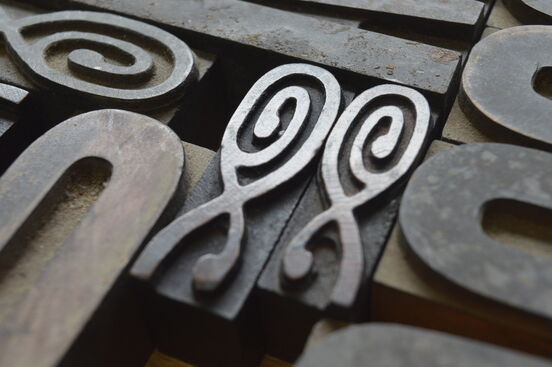
Detail of the Guy Ngan Letterpress Collection, Wai-te-ata Press, Te Herenga Waka Victoria University of Wellington, photograph by Kerry Ann Lee.
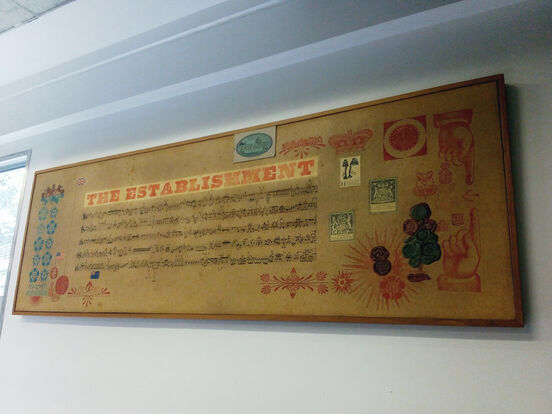
Guy Ngan, The Establishment, circa 1970s, framed mixed-media: drawing, printmaking, collage and wax seals, photograph courtesy of Wai-te-ata Press.
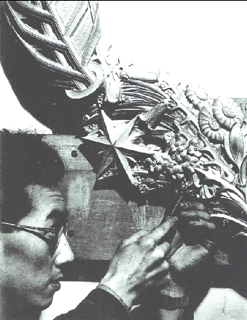
Guy Ngan with kauri mirror, London, early 1950s, photograph courtesy of Liz Ngan
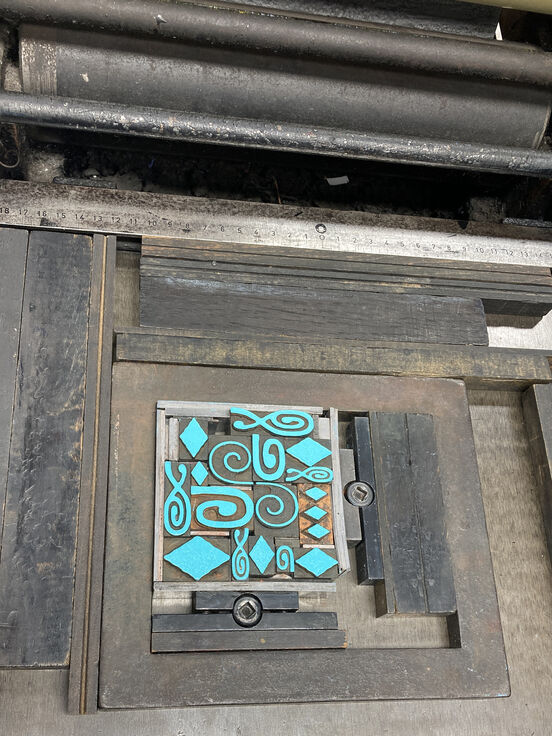
Inked composition, Wai-te-Ata Press, 2025, photograph by Kerry Ann Lee
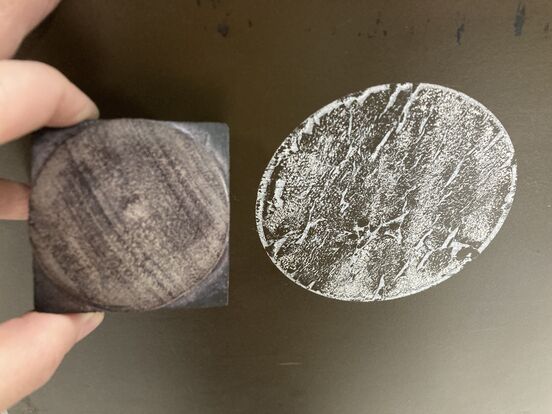
Block from the Guy Ngan Letterpress Collection and adhesive residue from an old sticker found on the side of a drawer at Wai-te-Ata Press, 2025, photograph by Kerry Ann Lee
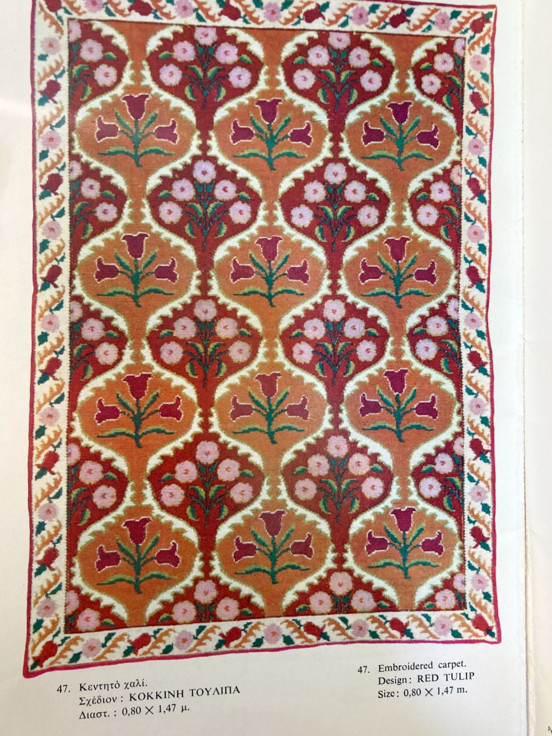
‘Greek Carpets’ by Βασιλική Προνοία and Τμήμα Οικοτεχνίας, published by Their Majesties' Fund, Handicraft Department, Athens, 1962, British School at Athens Library collection, photograph by Kerry Ann Lee
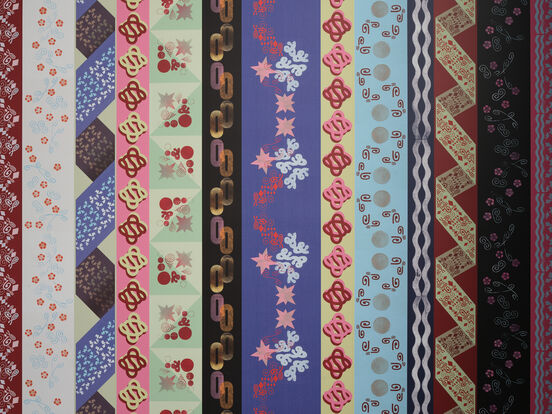
Kerry Ann Lee, A Chop That Breathes (detail), 2026, photograph by Sam Hartnett
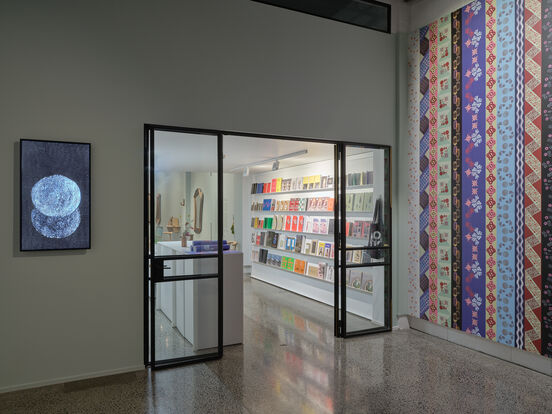
Kerry Ann Lee, A Chop That Breathes, 2026, photograph by Sam Hartnett